Top 1% Cited Papers of DGIST (2015-2024)

This curation highlights the Top 1% Most-Cited Papers published by DGIST researchers between 2015 and 2024. These publications represent our most impactful contributions to the global academic community, reflecting the highest level of scholarly achievement by our faculty. 72 papers ranked within the top 1% of Scopus citations (with full-time faculty or researchers as the first or corresponding author, as of the end of October 2025)
Deep Dive into SciVal & Outputs in Top Citation Percentiles
Deep Dive into World’s Top 1% Cited Papers @ DGIST 2015
Son, Byungrak (co-first & corresponding) / Division of Energy & Environmental Technology
Kim, J. G., Son, B., ... & Park, S. (2015). A review of lithium and non-lithium based solid state batteries. Journal of Power Sources, 282, 299-322. 

 Conventional lithium-ion liquid-electrolyte batteries are widely used in portable electronic equipment such as laptop computers, cell phones, and electric vehicles; however, they have several drawbacks, including expensive sealing agents and inherent hazards of fire and leakages. ... 
Go to DGIST Scholar
Shanmugam, Sangaraju (corresponding) / Department of Energy Science and Engineering
Ganesan, P., Prabu, M., Sanetuntikul, J., & Shanmugam, S. (2015). Cobalt sulfide nanoparticles grown on nitrogen and sulfur codoped graphene oxide: an efficient electrocatalyst for oxygen reduction and evolution reactions. ACS catalysis, 5(6), 3625-3637. 

 Electrochemical oxygen evolution and reduction reactions have received great attention due to their importance in several key technologies such as fuel cells, electrolyzers, and metal–air batteries. ...
Go to DGIST Scholar
Yu, Jong-Sung (corresponding) / Department of Energy Science and Engineering
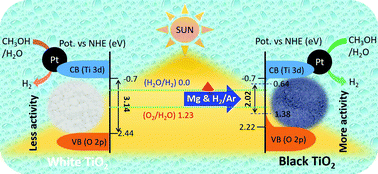
Sinhamahapatra, A., Jeon, J. P., & Yu, J. S. (2015). A new approach to prepare highly active and stable black titania for visible light-assisted hydrogen production. Energy & Environmental Science, 8(12), 3539-3544. 

 In spite of their remarkable enhancement in visible light absorption, black TiO2 materials have failed to demonstrate expected photocatalytic activity in visible light due to the presence of a high number of recombination centers. In this report, a new controlled magnesiothermic reduction has been developed to synthesize reduced black TiO2 under a 5% H2/Ar atmosphere. ...
Go to DGIST Scholar
Yu, Jong-Sung (corresponding) / Department of Energy Science and Engineering
Singh, K. P., Bae, E. J., & Yu, J. S. (2015). Fe–P: a new class of electroactive catalyst for oxygen reduction reaction. Journal of the American Chemical Society, 137(9), 3165-3168. 

 It has been long thought that Fe–N–C structure, where Fe is bonded with an electronegative heteroatom N, plays a key role as nonprecious metal catalyst for oxygen reduction reaction (ORR) in fuel cells. However, electrocatalytic activity of Fe bonded with electropositive heteroatom P has never been considered for ORR. Herein we report the electrocatalytic activity for ORR of new Fe–P–C.
Go to DGIST Scholar
Jeong, Nak Cheon (corresponding) / Department of Physics and Chemistry
Kim, H. K., Yun, W. S., Kim, M. B., Kim, J. Y., Bae, Y. S., Lee, J., & Jeong, N. C. (2015). A Chemical route to activation of open metal sites in the copper-based metal–organic framework materials HKUST-1 and Cu-MOF-2. Journal of the American Chemical Society, 137(31), 10009-10015. 

 Open coordination sites (OCSs) in metal–organic frameworks (MOFs) often function as key factors in the potential applications of MOFs, such as gas separation, gas sorption, and catalysis. For these applications, the activation process to remove the solvent molecules coordinated at the OCSs is an essential step that must be performed prior to use of the MOFs. ...
Go to DGIST Scholar
Deep Dive into World’s Top 1% Cited Papers @ DGIST 2016
Shanmugam, Sangaraju (corresponding) / Department of Energy Science and Engineering
Sivanantham, A., Ganesan, P., & Shanmugam, S. (2016). Hierarchical NiCo2S4 nanowire arrays supported on Ni foam: an efficient and durable bifunctional electrocatalyst for oxygen and hydrogen evolution reactions. Advanced Functional Materials, 26(26), 4661-4672. 

A recent approach for solar-to-hydrogen generation has been water electrolysis using efficient, stable, and inexpensive bifunctional electrocatalysts within strong electrolytes. Herein, the direct growth of 1D NiCo2S4 nanowire (NW) arrays on a 3D Ni foam (NF) is described. ... 
Go to DGIST Scholar
Lee, Jong-Soo (corresponding) / Department of Energy Science and Engineering
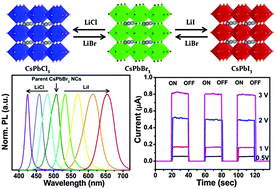
Ramasamy, P., Lim, D. H., Kim, B., Lee, S. H., Lee, M. S., & Lee, J. S. (2016). All-inorganic cesium lead halide perovskite nanocrystals for photodetector applications. Chemical communications, 52(10), 2067-2070.

Herein, we describe simple, fast and reproducible halide ion exchange reactions in CsPbX3 (X = Cl, Br, I) nanocrystals (NCs) at room temperature. Through the simple adjustment of the halide ion concentration, the photoluminescence of these NCs can be tuned over the entire visible region (425–655 nm). Photodetector devices based on entirely inorganic CsPbI3 NCs are demonstrated for the first time. The photodetectors exhibited a good on/off photocurrent ratio of 105.
Go to DGIST Scholar
Hong, Seung-Tae (co-corresponding) / Department of Energy Science and Engineering
Banerjee, A., Park, K. H., Heo, J. W., Nam, Y. J., Moon, C. K., Oh, S. M., ... & Jung, Y. S. (2016). Na3SbS4: a solution processable sodium superionic conductor for all‐solid‐state sodium‐ion batteries. Angewandte Chemie, 128(33), 9786-9790.

All-solid-state sodium-ion batteries that operate at room temperature are attractive candidates for use in large-scale energy storage systems. However, materials innovation in solid electrolytes is imperative to fulfill multiple requirements, including high conductivity, functional synthesis protocols for achieving intimate ionic contact with active materials, and air stability. ...
Go to DGIST Scholar
Yu, Jong-Sung (co-corresponding) / Department of Energy Science and Engineering
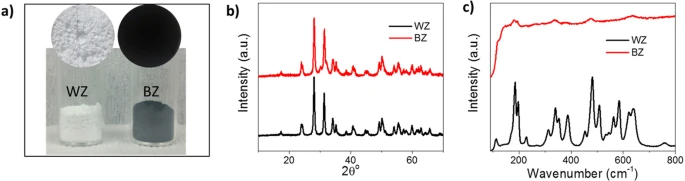
Sinhamahapatra, A., Jeon, J. P., Kang, J., Han, B., & Yu, J. S. (2016). Oxygen-deficient zirconia (ZrO2− x): a new material for solar light absorption. Scientific reports, 6(1), 27218.

Here, we present oxygen-deficient black ZrO2−x as a new material for sunlight absorption with a low band gap around ~1.5 eV, via a controlled magnesiothermic reduction in 5% H2/Ar from white ZrO2, a wide bandgap(~5 eV) semiconductor, usually not considered for solar light absorption. ...
Go to DGIST Scholar
Yang, Kee-Jeong (co-first) Son, Dae-Ho (co-first) Kang, Jin-Kyu (co-corresponding) Kim, Dae-Hwan (co-corresponding) / Division of Energy & Environmental Technology
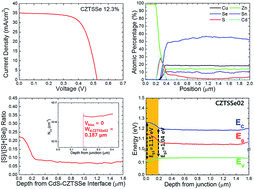
Yang, K. J., Son, D. H., Sung, S. J., Sim, J. H., Kim, Y. I., Park, S. N., ... & Kim, D. H. (2016). A band-gap-graded CZTSSe solar cell with 12.3% efficiency. Journal of Materials Chemistry A, 4(26), 10151-10158. 

Although Cu2ZnSn(S,Se)4 (CZTSSe) has attracted attention as an alternative to CuInGaSe2 (CIGS) as an absorber material in solar cells, its low efficiency is a serious shortcoming preventing its commercialization. ...
Go to DGIST Scholar
Yun, Jinhyo Joseph (first & corresponding) / Division of AI, Big data and Block chain
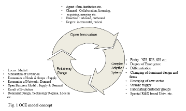
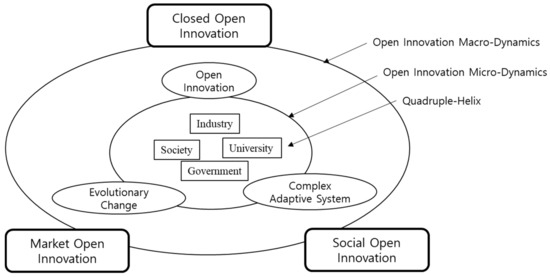
Yun, J. J., Won, D., & Park, K. (2016). Dynamics from open innovation to evolutionary change. Journal of open innovation: Technology, market, and complexity, 2(2), 1-22.

We created conceptual models that people may use to analyze and forecast the dynamic effects of open innovation, which we applied to the smartphone sector using a model-based analysis approach. ...
Go to DGIST Scholar
Shanmugam, Sangaraju (corresponding) / Department of Energy Science and Engineering
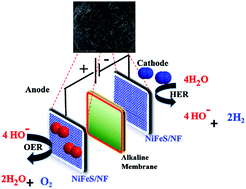
Ganesan, P., Sivanantham, A., & Shanmugam, S. (2016). Inexpensive electrochemical synthesis of nickel iron sulphides on nickel foam: super active and ultra-durable electrocatalysts for alkaline electrolyte membrane water electrolysis. Journal of Materials Chemistry A, 4(42), 16394-16402.

Efficient and durable electrocatalysts for water splitting (both the oxygen evolution reaction (OER) and hydrogen evolution reaction (HER)) are required for the replacement of expensive noble metal-based catalysts used in water electrolysis devices. ...
Go to DGIST Scholar
Lee, Myoung Jae (co-first & co-corresponding) / Division of Nanotechnology
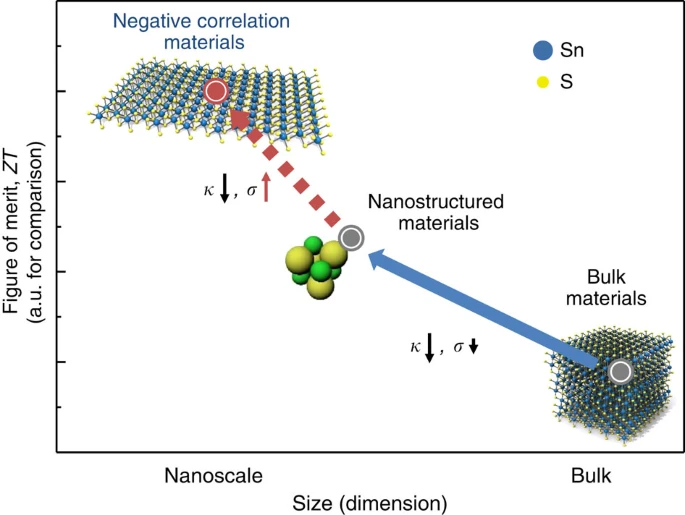
Lee, M. J., Ahn, J. H., Sung, J. H., Heo, H., Jeon, S. G., Lee, W., ... & Jo, M. H. (2016). Thermoelectric materials by using two-dimensional materials with negative correlation between electrical and thermal conductivity. Nature Communications, 7(1), 12011.

In general, in thermoelectric materials the electrical conductivity σ and thermal conductivity κ are related and thus cannot be controlled independently. Previously, to maximize the thermoelectric figure of merit in state-of-the-art materials, differences in relative scaling between σ and κ as dimensions are reduced to approach the nanoscale were utilized. ...
Go to DGIST Scholar
Deep Dive into World’s Top 1% Cited Papers @ DGIST 2017
Lee, Sungwon (co-first) / Department of Physics and Chemistry
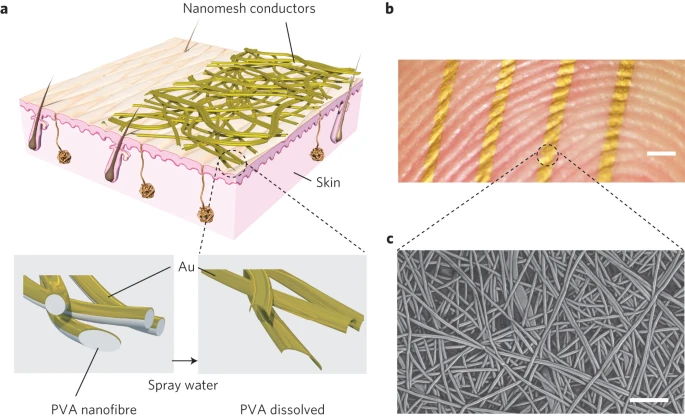
Miyamoto, A., Lee, S., Cooray, N. F., Lee, S., Mori, M., Matsuhisa, N., ... & Someya, T. (2017). Inflammation-free, gas-permeable, lightweight, stretchable on-skin electronics with nanomeshes. Nature nanotechnology, 12(9), 907-913.

Thin-film electronic devices can be integrated with skin for health monitoring and/or for interfacing with machines. Minimal invasiveness is highly desirable when applying wearable electronics directly onto human skin. However, manufacturing such on-skin electronics on planar substrates results in limited gas permeability. ... 
Go to DGIST Scholar
Jang, Kyung-In (co-first) / Department of Robotics and Mechatronics Engineering
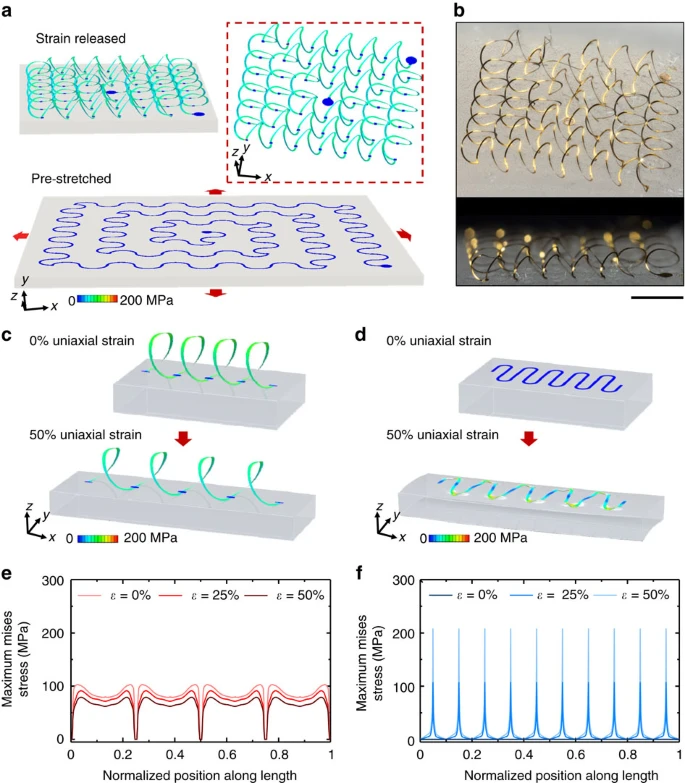
Jang, K. I., Li, K., Chung, H. U., Xu, S., Jung, H. N., Yang, Y., ... & Rogers, J. A. (2017). Self-assembled three dimensional network designs for soft electronics. Nature communications, 8(1), 1-10.

Low modulus, compliant systems of sensors, circuits and radios designed to intimately interface with the soft tissues of the human body are of growing interest, due to their emerging applications in continuous, clinical-quality health monitors and advanced, bioelectronic therapeutics. ...
Go to DGIST Scholar
Oh, Sehoon (first & corresponding) / Department of Robotics and Mechatronics Engineering
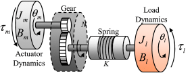
Oh, S., & Kong, K. (2016). High-precision robust force control of a series elastic actuator. IEEE/ASME Transactions on mechatronics, 22(1), 71-80.

A series elastic actuator (SEA) is a promising actuation method in force control applications that intelligently interacts with environments. The SEA is characterized by a spring placed between a load and an actuator, which is an electric motor in most cases. ...
Go to DGIST Scholar
Hong, Seonki (co-first) / Department of Physics and Chemistry
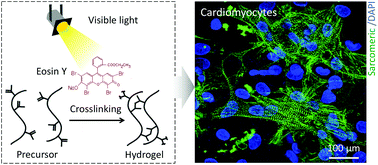
Noshadi, I., Hong, S., Sullivan, K. E., Sani, E. S., Portillo-Lara, R., Tamayol, A., ... & Annabi, N. (2017). In vitro and in vivo analysis of visible light crosslinkable gelatin methacryloyl (GelMA) hydrogels. Biomaterials science, 5(10), 2093-2105.

Photocrosslinkable materials have been frequently used for constructing soft and biomimetic hydrogels for tissue engineering. Although ultraviolet (UV) light is commonly used for photocrosslinking such materials, its use has been associated with several biosafety concerns such as DNA damage, accelerated aging of tissues, and cancer. ...
Go to DGIST Scholar
Hong, Seung-Tae (corresponding) / Department of Energy Science and Engineering
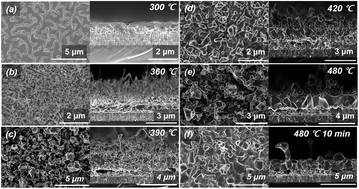
Chae, M. S., Heo, J. W., Kwak, H. H., Lee, H., & Hong, S. T. (2017). Organic electrolyte-based rechargeable zinc-ion batteries using potassium nickel hexacyanoferrate as a cathode material. Journal of Power Sources, 337, 204-211.

This study demonstrates an organic electrolyte-based rechargeable zinc-ion battery (ZIB) using Prussian blue (PB) analogue potassium nickel hexacyanoferrate K0.86Ni[Fe(CN)6]0.954(H2O)0.766 (KNF-086) as the cathode material. ...
Go to DGIST Scholar
Shanmugam, Sangaraju (corresponding) / Department of Energy Science and Engineering
Sivanantham, A., & Shanmugam, S. (2017). Nickel selenide supported on nickel foam as an efficient and durable non-precious electrocatalyst for the alkaline water electrolysis. Applied Catalysis B: Environmental, 203, 485-493.

Herein, we describe an in-situ hybridization of Nickel Selenide (Ni3Se2) with a Nickel Foam (NF) current collector as an efficient, ultra-durable electrode for the continuous alkaline water electrolysis. ...
Go to DGIST Scholar
Choi, Ji-Woong (corresponding) / Department of Electrical Engineering and Computer Science
Kim, H. J., Hirayama, H., Kim, S., Han, K. J., Zhang, R., & Choi, J. W. (2017). Review of near-field wireless power and communication for biomedical applications. IEEE Access, 5, 21264-21285.

Near-field magnetic wireless systems have distinct advantages over their conventional farfield counterparts in water-rich environments, such as underwater, underground, and in biological tissues, due to lower power absorption. ...
Go to DGIST Scholar
Lee, Jong-Soo (corresponding) / Department of Energy Science and Engineering
Ramasamy, P., Kim, N., Kang, Y. S., Ramirez, O., & Lee, J. S. (2017). Tunable, bright, and narrow-band luminescence from colloidal indium phosphide quantum dots. Chemistry of Materials, 29(16), 6893-6899.

Synthesis of cadmium (Cd)-free quantum dots (QDs) with tunable emission and high color purity has been a big challenge for the academic and industrial research community. ...
Go to DGIST Scholar
Deep Dive into World’s Top 1% Cited Papers @ DGIST 2018
Yun, Jinhyo Joseph (corresponding) / Division of AI, Big data and Block chain
Lee, M., Yun, J. J., Pyka, A., Won, D., Kodama, F., Schiuma, G., ... & Zhao, X. (2018). How to respond to the fourth industrial revolution, or the second information technology revolution? Dynamic new combinations between technology, market, and society through open innovation. Journal of Open Innovation: Technology, Market, and Complexity, 4(3), 21.

Since Klaus Schwab and the World Economic Forum declared the arrival of the Fourth Industrial Revolution, there has been much discussion about it. ...
Go to DGIST Scholar
Shanmugam, Sangaraju (co-corresponding) / Department of Energy Science and Engineering
Surendran, S., Shanmugapriya, S., Sivanantham, A., Shanmugam, S., & Kalai Selvan, R. (2018). Electrospun carbon nanofibers encapsulated with NiCoP: a multifunctional electrode for supercapattery and oxygen reduction, oxygen evolution, and hydrogen evolution reactions. Advanced Energy Materials, 8(20), 1800555.

Functionalizing nanostructured carbon nanofibers (CNFs) with bimetallic phosphides enables the material to become an active electrode for multifunctional applications. ...
Go to DGIST Scholar
Hong, Seonki (co-first & co-corresponding) / Department of Physics and Chemistry
Hong, S., Wang, Y., Park, S. Y., & Lee, H. (2018). Progressive fuzzy cation-π assembly of biological catecholamines. Science advances, 4(9), eaat7457.

Biological functions depend on biomolecular assembly processes. Assemblies of lipid bilayers, actins, microtubules, or chromosomes are indispensable for cellular functions. ...
Go to DGIST Scholar
Deep Dive into World’s Top 1% Cited Papers @ DGIST 2019
Kim, Bong Hoon (co-first) / Department of Robotics and Mechatronics Engineering
Chung, H. U., Kim, B. H., Lee, J. Y., Lee, J., Xie, Z., Ibler, E. M., ... & Rogers, J. A. (2019). Binodal, wireless epidermal electronic systems with in-sensor analytics for neonatal intensive care. Science, 363(6430), eaau0780.

Existing vital sign monitoring systems in the neonatal intensive care unit (NICU) require multiple wires connected to rigid sensors with strongly adherent interfaces to the skin. ... 
Go to DGIST Scholar
Hong, Seonki (co-corresponding) / Department of Physics and Chemistry
Lee, H. A., Ma, Y., Zhou, F., Hong, S., & Lee, H. (2019). Material-independent surface chemistry beyond polydopamine coating. Accounts of chemical research, 52(3), 704-713.

Various methods have been developed in surface chemistry to control interface properties of a solid material. A selection rule among surface chemistries is compatibility between a surface functionalization tool and a target material. ...
Go to DGIST Scholar
Shanmugam, Sangaraju (co-corresponding) / Department of Energy Science and Engineering
Darband, G. B., Aliofkhazraei, M., & Shanmugam, S. (2019). Recent advances in methods and technologies for enhancing bubble detachment during electrochemical water splitting. Renewable and Sustainable Energy Reviews, 114, 109300.

Development of new electrocatalysts with high electrocatalytic activity and stability is of great importance in the production of hydrogen fuel. Numerous methods have been established to increase the activity of electrocatalysts, including increasing active surface area and improving intrinsic catalytic activity. ... 
Go to DGIST Scholar
Kim, Jin-Young (co-corresponding) / Division of Biomedical Technology, Yu, Seong-Woon (co-corresponding) / Department of Brain Sciences
Jeon, S., Kim, S., Ha, S., Lee, S., Kim, E., Kim, S. Y., ... & Choi, H. (2019). Magnetically actuated microrobots as a platform for stem cell transplantation. Science Robotics, 4(30), eaav4317.

Magnetic microrobots were developed for three-dimensional culture and the precise delivery of stem cells in vitro, ex vivo, and in vivo. ...
Go to DGIST Scholar
Son, Dae-Ho (first), Yang, Kee-Jeong (co-corresponding), Kim, Dae-Hwan (co-corresponding) / Division of Energy & Environmental Technology
Son, D. H., Kim, S. H., Kim, S. Y., Kim, Y. I., Sim, J. H., Park, S. N., ... & Kim, D. H. (2019). Effect of solid-H 2 S gas reactions on CZTSSe thin film growth and photovoltaic properties of a 12.62% efficiency device. Journal of Materials Chemistry A, 7(44), 25279-25289.

We fabricated CZTSSe thin films using optimized SLG-Mo/Zn/Cu/Sn (MZCT) as a stacked structure and described the phenomenon of Zn elemental volatilization using the MZCT stacked structure. ...
Go to DGIST Scholar
Yun, Jinhyo Joseph (first & corresponding) / Division of AI, Big data and Block chain
Yun, J. J., & Liu, Z. (2019). Micro-and macro-dynamics of open innovation with a quadruple-helix model. Sustainability, 11(12), 3301.

This paper explores how sustainability can be achieved through open innovation in the current 4th industrial revolution. Through a literature and practice review, we identify micro- and macro-dynamics of open innovation in addition to the dynamic roles of industry, government, university, and society. ...
Go to DGIST Scholar
Yu, Seong-Woon (corresponding) / Department of Brain Sciences
Lee, J. W., Nam, H., Kim, L. E., Jeon, Y., Min, H., Ha, S., ... & Yu, S. W. (2019). TLR4 (toll-like receptor 4) activation suppresses autophagy through inhibition of FOXO3 and impairs phagocytic capacity of microglia. Autophagy, 15(5), 753-770.

Macroautophagy/autophagy is a lysosome-dependent catabolic process for the turnover of proteins and organelles in eukaryotes. ...
Go to DGIST Scholar
Deep Dive into World’s Top 1% Cited Papers @ DGIST 2020
Lee, Ju-Hyuck (co-corresponding) / Department of Energy Science and Engineering
Kim, D., Han, S. A., Kim, J. H., Lee, J. H., Kim, S. W., & Lee, S. W. (2020). Biomolecular piezoelectric materials: from amino acids to living tissues. Advanced Materials, 32(14), 1906989.

Biomolecular piezoelectric materials are considered a strong candidate material for biomedical applications due to their robust piezoelectricity, biocompatibility, and low dielectric property. ... 
Go to DGIST Scholar
Yu, Seong-Woon (corresponding) / Department of Brain Sciences
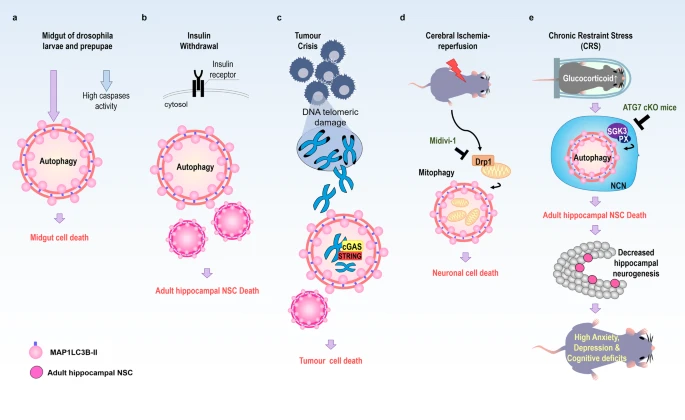
Jung, S., Jeong, H., & Yu, S. W. (2020). Autophagy as a decisive process for cell death. Experimental & molecular medicine, 52(6), 921-930.

Autophagy is an intracellular catabolic pathway in which cellular constituents are engulfed by autophagosomes and degraded upon autophagosome fusion with lysosomes. ...
Go to DGIST Scholar
Deep Dive into World’s Top 1% Cited Papers @ DGIST 2021
Lee, Jaehong (first & co-corresponding) / Department of Robotics and Mechatronics Engineering
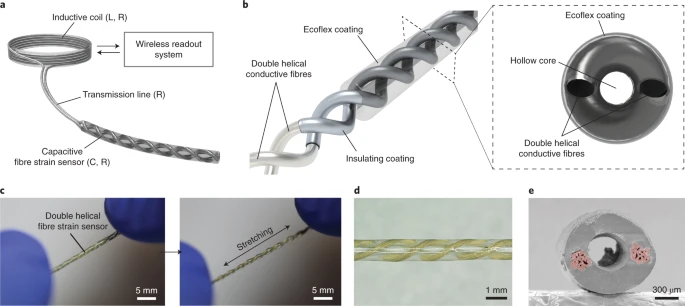
Lee, J., Ihle, S. J., Pellegrino, G. S., Kim, H., Yea, J., Jeon, C. Y., ... & Vörös, J. (2021). Stretchable and suturable fibre sensors for wireless monitoring of connective tissue strain. Nature Electronics, 4(4), 291-301.

Implantable sensors can be used to monitor biomechanical strain continuously. However, three key challenges need to be addressed before they can be of use in clinical practice: the structural mismatch between the sensors and tissue or organs should be eliminated; a practical suturing attachment process should be developed; and the sensors should be equipped with wireless readout. ... 
Go to DGIST Scholar
In, Su-Il (co-corresponding) / Department of Energy Science and Engineering
Zhou, L., Lei, J., Wang, F., Wang, L., Hoffmann, M. R., Liu, Y., ... & Zhang, J. (2021). Carbon nitride nanotubes with in situ grafted hydroxyl groups for highly efficient spontaneous H2O2 production. Applied Catalysis B: Environmental, 288, 119993.

An active and inexpensive photocatalyst for H2O2 production is desirable for industrial applications. However, obtaining high photocatalytic activity from metal-free catalysts without the use of sacrificial electron donors is difficult. ...
Go to DGIST Scholar
Yang, Jiwoong (co-first) / Department of Energy Science and Engineering
Yang, J., Choi, M. K., Yang, U. J., Kim, S. Y., Kim, Y. S., Kim, J. H., ... & Hyeon, T. (2020). Toward full-color electroluminescent quantum dot displays. Nano Letters, 21(1), 26-33.

Colloidal quantum dots (QDs) exhibit unique characteristics such as facile color tunability, pure color emission with extremely narrow bandwidths, high luminescence efficiency, and high photostability. ... 
Go to DGIST Scholar
Kim, Hoe Joon (co-corresponding) / Department of Robotics and Mechatronics Engineering
Hajra, S., Sahu, M., Padhan, A. M., Lee, I. S., Yi, D. K., Alagarsamy, P., ... & Kim, H. J. (2021). A green metal–organic framework‐cyclodextrin mof: a novel multifunctional material based triboelectric nanogenerator for highly efficient mechanical energy harvesting. Advanced Functional Materials, 31(28), 2101829.

The naturally available cyclodextrin has opened up a wide range of research avenues because of its superior characteristics such as being non-toxic, biocompatible, and edible. ...
Go to DGIST Scholar
Deep Dive into World’s Top 1% Cited Papers @ DGIST 2022
In, Su-Il (corresponding) / Department of Energy Science and Engineering
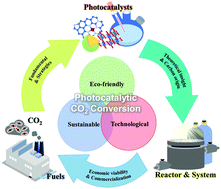
Gong, E., Ali, S., Hiragond, C. B., Kim, H. S., Powar, N. S., Kim, D., ... & In, S. I. (2022). Solar fuels: research and development strategies to accelerate photocatalytic CO 2 conversion into hydrocarbon fuels. Energy & Environmental Science, 15(3), 880-937.

Photocatalytic production of solar fuels from CO2 is a promising strategy for addressing global environmental problems and securing future energy supplies. ...
Go to DGIST Scholar
Park, Sang Hyun (co-corresponding) / Department of Robotics and Mechatronics Engineering
Shoaib, M., Hussain, T., Shah, B., Ullah, I., Shah, S. M., Ali, F., & Park, S. H. (2022). Deep learning-based segmentation and classification of leaf images for detection of tomato plant disease. Frontiers in plant science, 13, 1031748.

Plants contribute significantly to the global food supply. Various Plant diseases can result in production losses, which can be avoided by maintaining vigilance. ...
Go to DGIST Scholar
Kim, Hoe Joon (corresponding) / Department of Robotics and Mechatronics Engineering
Panda, S., Hajra, S., Mistewicz, K., In-na, P., Sahu, M., Rajaitha, P. M., & Kim, H. J. (2022). Piezoelectric energy harvesting systems for biomedical applications. Nano energy, 100, 107514.

In the present era, self-powered technology and smart materials have paved the way for the design of numerous implantable energy harvesting and biomedical applications. ...
Go to DGIST Scholar
Sung, Jooyoung (co-first) / Department of Physics and Chemistry
Otero‐Martínez, C., Ye, J., Sung, J., Pastoriza‐Santos, I., Pérez‐Juste, J., Xia, Z., ... & Polavarapu, L. (2022). Colloidal metal‐halide perovskite nanoplatelets: thickness‐controlled synthesis, properties, and application in light‐emitting diodes. Advanced Materials, 34(10), 2107105.

Colloidal metal-halide perovskite nanocrystals (MHP NCs) are gaining significant attention for a wide range of optoelectronics applications owing to their exciting properties, such as defect tolerance, near-unity photoluminescence quantum yield, and tunable emission across the entire visible wavelength range. ...
Go to DGIST Scholar
Lee, Sung Jun (co-corresponding), Choi, Seong-Kyoon (co-corresponding) / Division of Biomedical Technology
Kwon, W., Kim, D., Kim, H. Y., Jeong, S. W., Lee, S. G., Kim, H. C., ... & Choi, S. K. (2022). Microglial phagocytosis of polystyrene microplastics results in immune alteration and apoptosis in vitro and in vivo. Science of the Total Environment, 807, 150817.

The remarkable increase in plastic usage and widespread microplastic (MP) pollution has emerged as a substantial concern today. ...
Go to DGIST Scholar
Kim, Hyunmin (corresponding) / Division of Biomedical Technology
Hunge, Y. M., Yadav, A. A., Kang, S. W., & Kim, H. (2022). Photocatalytic degradation of tetracycline antibiotics using hydrothermally synthesized two-dimensional molybdenum disulfide/titanium dioxide composites. Journal of Colloid and Interface Science, 606, 454-463.

Tetracycline (TC) is a persistent antibiotic used in many countries, including China, India, and the United States of America (USA), because of its low price and effectiveness in enhancing livestock production. ...
Go to DGIST Scholar
In, Su-Il (co-corresponding) / Department of Energy Science and Engineering
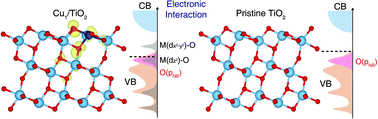
Lee, B. H., Gong, E., Kim, M., Park, S., Kim, H. R., Lee, J., ... & Hyeon, T. (2022). Electronic interaction between transition metal single-atoms and anatase TiO 2 boosts CO 2 photoreduction with H 2 O. Energy & Environmental Science, 15(2), 601-609.

Single-atom catalysts are playing a pivotal-role in understanding atomic-level photocatalytic processes. However, single-atoms are typically non-uniformly distributed on photocatalyst surfaces, hindering the systematic investigation of structure–property correlation at atomic precision. ...
Go to DGIST Scholar
In, Su-Il (corresponding) / Department of Energy Science and Engineering
Ali, S., Razzaq, A., Kim, H., & In, S. I. (2022). Activity, selectivity, and stability of earth-abundant CuO/Cu2O/Cu0-based photocatalysts toward CO2 reduction. Chemical Engineering Journal, 429, 131579.

Cu-based photocatalysts are widely used for the photocatalytic reduction of CO2 owing to their non-toxicity, earth abundance, extended light absorption, suppressed charge recombination, and good catalytic performance. ...
Go to DGIST Scholar
In, Su-Il (corresponding) / Department of Energy Science and Engineering
Hiragond, C. B., Powar, N. S., Lee, J., & In, S. I. (2022). Single‐atom catalysts (SACs) for photocatalytic CO2 reduction with H2O: Activity, product selectivity, stability, and surface chemistry. Small, 18(29), 2201428.

In recent years, single-atom catalysts (SACs) have attracted the interest of researchers owing to their suitability for various catalytic applications. ...
Go to DGIST Scholar
Kim, Hyunmin (corresponding) / Division of Biomedical Technology
Hunge, Y. M., Yadav, A. A., Kang, S. W., & Kim, H. (2022). Facile synthesis of multitasking composite of Silver nanoparticle with Zinc oxide for 4-nitrophenol reduction, photocatalytic hydrogen production, and 4-chlorophenol degradation. Journal of Alloys and Compounds, 928, 167133.

The multifunctional zinc oxide electrode was used in numerous applications. This study includes the catalytic performance of zinc oxide, which is further enhanced by the silver nanoparticle. ...
Go to DGIST Scholar
Park, Kyung-Joon (corresponding) / Department of Electrical Engineering and Computer Science
Kim, S., Park, K. J., & Lu, C. (2022). A survey on network security for cyber–physical systems: From threats to resilient design. IEEE Communications Surveys & Tutorials, 24(3), 1534-1573.

Cyber-physical systems (CPS) are considered the integration of physical systems in the real world and control software in computing systems. In CPS, the real world and the computing systems are connected through networks with real-time information exchange. ...
Go to DGIST Scholar
Kim, Bong Hoon (co-corresponding) / Department of Robotics and Mechatronics Engineering
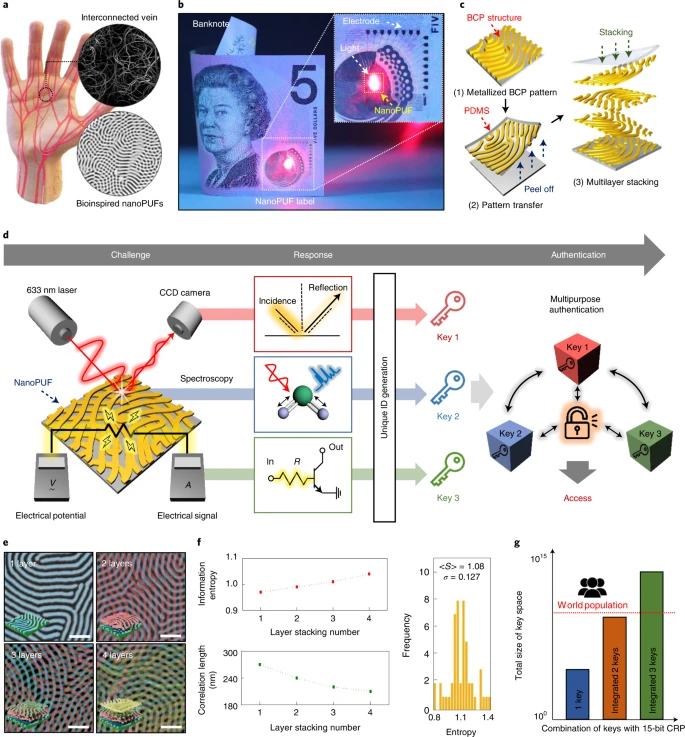
Kim, J. H., Jeon, S., In, J. H., Nam, S., Jin, H. M., Han, K. H., ... & Kim, S. O. (2022). Nanoscale physical unclonable function labels based on block copolymer self-assembly. Nature Electronics, 5(7), 433-442.

Hardware-based cryptography that exploits physical unclonable functions is required for the secure identification and authentication of devices in the Internet of Things. ...
Go to DGIST Scholar
Hong, Seonki (co-corresponding) / Department of Physics and Chemistry, Kim, Hoe Joon(co-corresponding) Department of Robotics and Mechatronics Engineering
Panda, S., Hajra, S., Jeong, H., Panigrahi, B. K., Pakawanit, P., Dubal, D., ... & Kim, H. J. (2022). Biocompatible CaTiO3-PVDF composite-based piezoelectric nanogenerator for exercise evaluation and energy harvesting. Nano Energy, 102, 107682.

Biocompatible energy-harvesting platforms can significantly promote the development of self-powered devices to improve the human lifestyle. ...
Go to DGIST Scholar
Kim, Hoe Joon (co-corresponding) / Department of Robotics and Mechatronics Engineering
Sahu, M., Hajra, S., Panda, S., Rajaitha, M., Panigrahi, B. K., Rubahn, H. G., ... & Kim, H. J. (2022). Waste textiles as the versatile triboelectric energy-harvesting platform for self-powered applications in sports and athletics. Nano Energy, 97, 107208.

The triboelectric nanogenerator (TENG) has emerged as a promising technology for the conversion of mechanical energy into electrical energy. ...
Go to DGIST Scholar
Lee, Jaemin (corresponding) / Department of New Biology
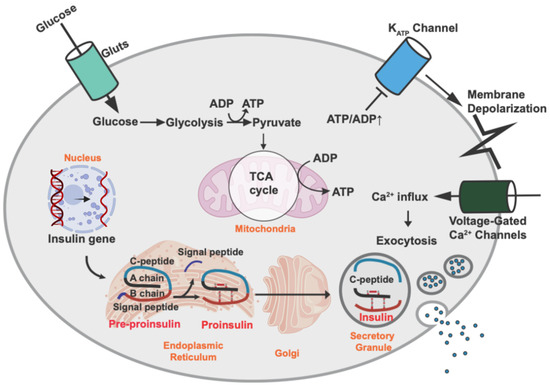
Lee, J. H., & Lee, J. (2022). Endoplasmic reticulum (ER) stress and its role in pancreatic β-cell dysfunction and senescence in type 2 diabetes. International journal of molecular sciences, 23(9), 4843.

An increased life span and accompanying nutritional affluency have led to a rapid increase in diseases associated with aging, such as obesity and type 2 diabetes, imposing a tremendous economic and health burden on society. ...
Go to DGIST Scholar
Deep Dive into World’s Top 1% Cited Papers @ DGIST 2023
Kim, Hyunmin (corresponding) / Division of Biomedical Technology
Hunge, Y. M., Yadav, A. A., Kang, S. W., Lim, S. J., & Kim, H. (2023). Visible light activated MoS2/ZnO composites for photocatalytic degradation of ciprofloxacin antibiotic and hydrogen production. Journal of Photochemistry and Photobiology A: Chemistry, 434, 114250.

In the photocatalysis process, photon energy is mainly converted into chemical energy with the help of both light and catalyst. This process can be used in different applications like photocatalytic degradation of hazardous compounds, fixation of nitrogen, hydrogen production, air purification, water splitting, carbon dioxide reduction etc. ...
Go to DGIST Scholar
Kim, Hoe Joon (co-corresponding) / Department of Robotics and Mechatronics Engineering
Panda, S., Hajra, S., Oh, Y., Oh, W., Lee, J., Shin, H., ... & Kim, H. J. (2023). Hybrid nanogenerators for ocean energy harvesting: mechanisms, designs, and applications. Small, 19(25), 2300847.

The ocean holds vast potential as a renewable energy source, but harnessing its power has been challenging due to low-frequency and high-amplitude stimulation. ...
Go to DGIST Scholar
Kwon, Hyuk-Jun (corresponding) / Department of Electrical Engineering and Computer Science
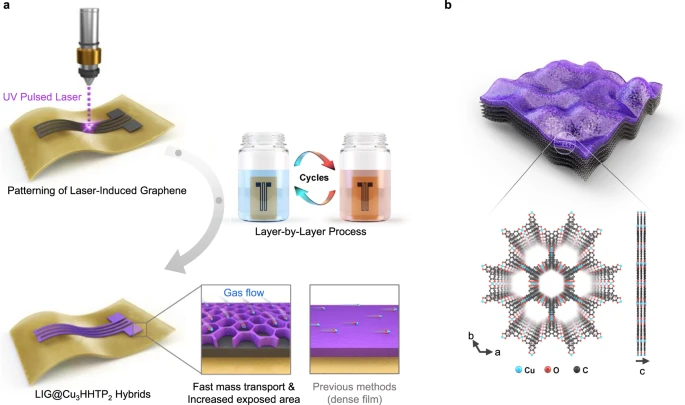
Lim, H., Kwon, H., Kang, H., Jang, J. E., & Kwon, H. J. (2023). Semiconducting MOFs on ultraviolet laser-induced graphene with a hierarchical pore architecture for NO2 monitoring. Nature Communications, 14(1), 3114.

Due to rapid urbanization worldwide, monitoring the concentration of nitrogen dioxide (NO2), which causes cardiovascular and respiratory diseases, has attracted considerable attention. ...
Go to DGIST Scholar
Im, Sunghoon (corresponding) / Department of Electrical Engineering and Computer Science
Bae, J., Moon, S., & Im, S. (2023, June). Deep digging into the generalization of self-supervised monocular depth estimation. In Proceedings of the AAAI conference on artificial intelligence (Vol. 37, No. 1, pp. 187-196).

Self-supervised monocular depth estimation has been widely studied recently. ...
Go to DGIST Scholar
Kim, Hoe Joon (co-corresponding) / Department of Robotics and Mechatronics Engineering
Divya, S., Panda, S., Hajra, S., Jeyaraj, R., Paul, A., Park, S. H., ... & Oh, T. H. (2023). Smart data processing for energy harvesting systems using artificial intelligence. Nano Energy, 106, 108084.

Recent substantial advancements in computational techniques, particularly in artificial intelligence (AI) and machine learning (ML), have raised the demand for smart self-powered devices. ...
Go to DGIST Scholar
Kim, Hoe Joon (co-corresponding) / Department of Robotics and Mechatronics Engineering
Hajra, S., Panda, S., Khanberh, H., Vivekananthan, V., Chamanehpour, E., Mishra, Y. K., & Kim, H. J. (2023). Revolutionizing self-powered robotic systems with triboelectric nanogenerators. Nano Energy, 115, 108729.

Triboelectric nanogenerators (TENGs), offering self-powered actuation, grasping, and sensing capabilities without the need for an external power source, have the potential to revolutionize the field of self-powered robotic systems. ...
Go to DGIST Scholar
Yu, Jong-Sung (corresponding) / Department of Energy Science and Engineering
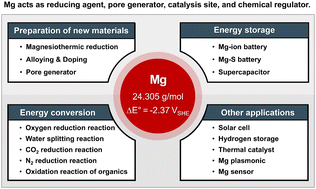
Shin, C. H., Lee, H. Y., Gyan-Barimah, C., Yu, J. H., & Yu, J. S. (2023). Magnesium: properties and rich chemistry for new material synthesis and energy applications. Chemical Society Reviews, 52(6), 2145-2192.

Magnesium (Mg) has many unique properties suitable for applications in the fields of energy conversion and storage. These fields presently rely on noble metals for efficient performance. ...
Go to DGIST Scholar
Choi, Jongmin (co-corresponding) / Department of Energy Science and Engineering
Lim, S., Han, S., Kim, D., Min, J., Choi, J., & Park, T. (2023). Key factors affecting the stability of CsPbI3 perovskite quantum dot solar cells: a comprehensive review. Advanced Materials, 35(4), 2203430.

The power conversion efficiency of CsPbI3 perovskite quantum dot (PQD) solar cells shows increase from 10.77% to 16.2% in a short period owing to advances in material and device design for solar cells. ...
Go to DGIST Scholar
Kim, Hoe Joon (co-corresponding) / Department of Robotics and Mechatronics Engineering
Swain, J., Priyadarshini, A., Hajra, S., Panda, S., Panda, J., Samantaray, R., ... & Sahu, R. (2023). Photocatalytic dye degradation by BaTiO3/zeolitic imidazolate framework composite. Journal of Alloys and Compounds, 965, 171438.

Chemical dyes present in wastewater generated from textile and paint industries can cause serious environmental and health hazards if not adequately treated. ...
Go to DGIST Scholar
Deep Dive into World’s Top 1% Cited Papers @ DGIST 2024
Yea, Kyungmoo (co-corresponding) / Department of New Biology
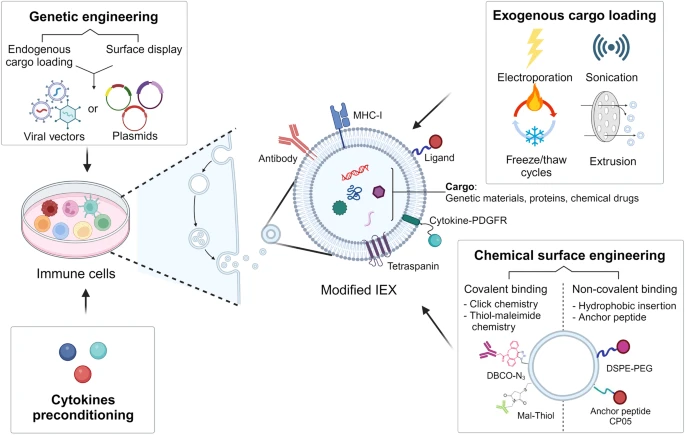
Jung, I., Shin, S., Baek, M. C., & Yea, K. (2024). Modification of immune cell-derived exosomes for enhanced cancer immunotherapy: current advances and therapeutic applications. Experimental & Molecular Medicine, 56(1), 19-31.

Cancer immunotherapy has revolutionized the approach to cancer treatment of malignant tumors by harnessing the body’s immune system to selectively target cancer cells. ... 
Go to DGIST Scholar
Yang, Jiwoong (co-corresponding) / Department of Energy Science and Engineering
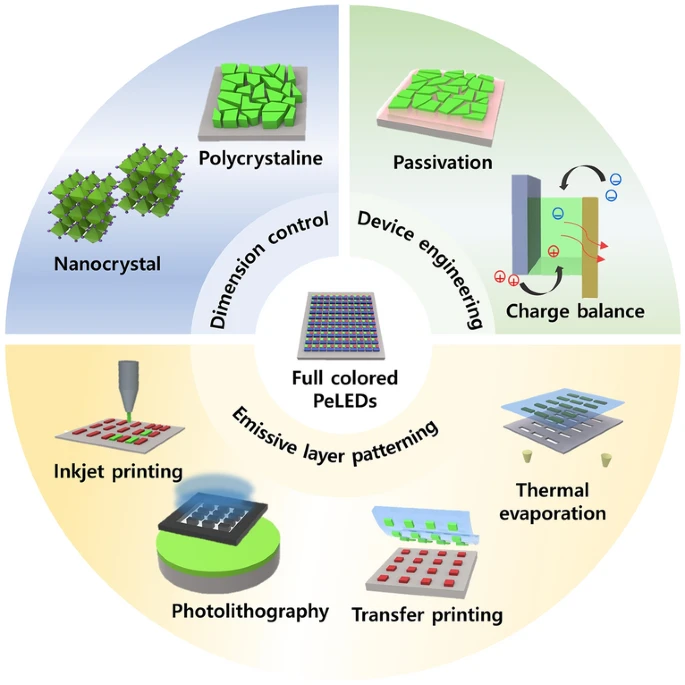
Lee, G. H., Kim, K., Kim, Y., Yang, J., & Choi, M. K. (2024). Recent advances in patterning strategies for full-color perovskite light-emitting diodes. Nano-Micro Letters, 16(1), 45.

Metal halide perovskites have emerged as promising light-emitting materials for next-generation displays owing to their remarkable material characteristics including broad color tunability, pure color emission with remarkably narrow bandwidths, high quantum yield, and solution processability. ...
Go to DGIST Scholar
Lee, Youngu (corresponding) / Department of Energy Science and Engineering
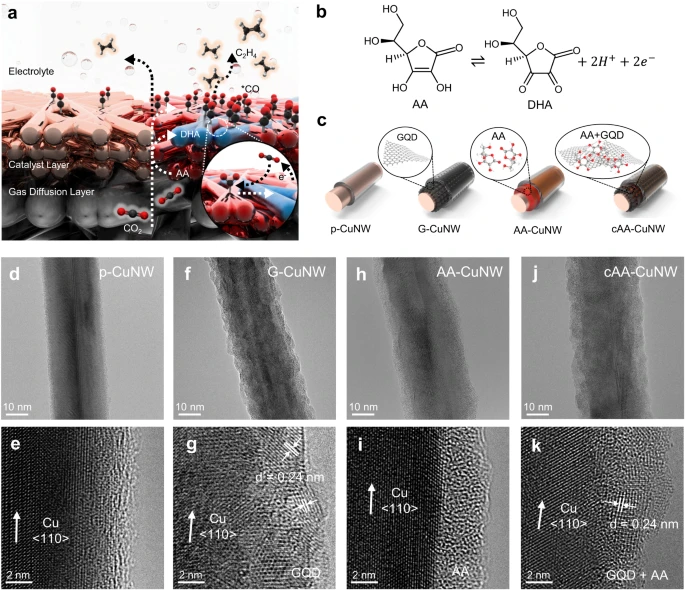
Kim, J., Lee, T., Jung, H. D., Kim, M., Eo, J., Kang, B., ... & Nam, D. H. (2024). Vitamin C-induced CO2 capture enables high-rate ethylene production in CO2 electroreduction. Nature Communications, 15(1), 192.

High-rate production of multicarbon chemicals via the electrochemical CO2 reduction can be achieved by efficient CO2 mass transport. . ...
Go to DGIST Scholar
Yang, Jiwoong (co-corresponding) / Department of Energy Science and Engineering
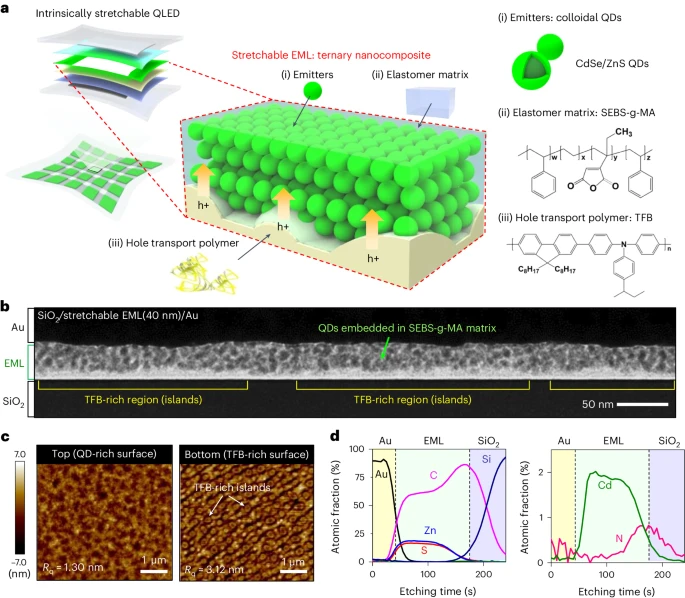
Kim, D. C., Seung, H., Yoo, J., Kim, J., Song, H. H., Kim, J. S., ... & Kim, D. H. (2024). Intrinsically stretchable quantum dot light-emitting diodes. Nature Electronics, 7(5), 365-374.

Stretchable displays that can change their shape and size under strain could be used to create displays with unconventional form factors. ...
Go to DGIST Scholar
Yang, Jiwoong (co-corresponding) / Department of Energy Science and Engineering
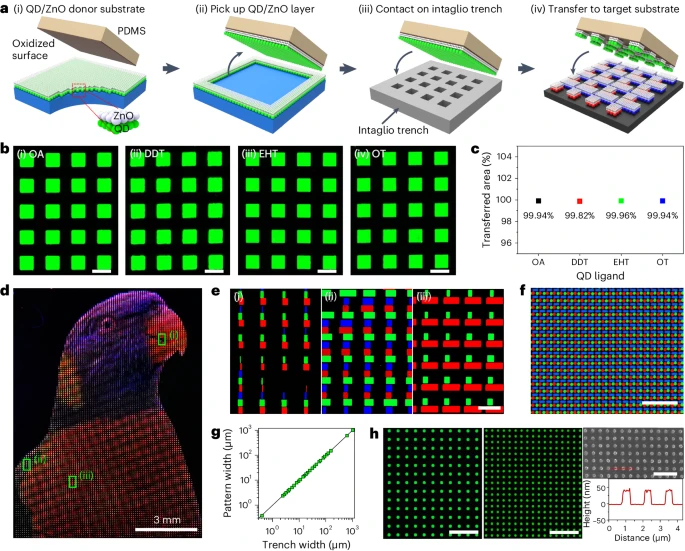
Yoo, J., Lee, K., Yang, U. J., Song, H. H., Jang, J. H., Lee, G. H., ... & Choi, M. K. (2024). Highly efficient printed quantum dot light-emitting diodes through ultrahigh-definition double-layer transfer printing. Nature Photonics, 18(10), 1105-1112.

Highly efficient and high-definition displays with deformable form factors are highly desirable for next-generation electronic devices. ...
Go to DGIST Scholar
Kim, Hoe Joon (co-corresponding) / Department of Robotics and Mechatronics Engineering
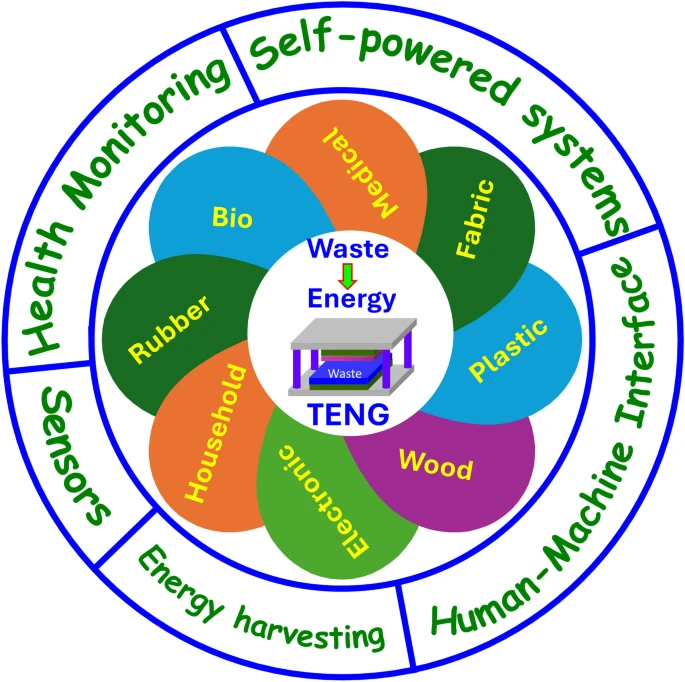
Kumar, K. U., Hajra, S., Mohana Rani, G., Panda, S., Umapathi, R., Venkateswarlu, S., ... & Kumar, R. R. (2024). Revolutionizing waste-to-energy: harnessing the power of triboelectric nanogenerators. Advanced Composites and Hybrid Materials, 7(3), 91.

Recently, there has been a lot of focus on developing new waste-to-energy technologies because they help us to provide sustainable energy solutions for future generations. ...
Go to DGIST Scholar
Jang, Kyung-In (corresponding) / Department of Robotics and Mechatronics Engineering
Oh, S., Jekal, J., Liu, J., Kim, J., Park, J. U., Lee, T., & Jang, K. I. (2024). Bioelectronic implantable devices for physiological signal recording and closed‐loop neuromodulation. Advanced Functional Materials, 34(41), 2403562.

Bioelectronic implantable devices are adept at facilitating continuous monitoring of health and enabling the early detection of diseases, offering insights into the physiological conditions of various bodily organs. ...
Go to DGIST Scholar
Kim, Hoe Joon (corresponding) / Department of Robotics and Mechatronics Engineering
Kaja, K. R., Hajra, S., Panda, S., Belal, M. A., Pharino, U., Khanbareh, H., ... & Kim, H. J. (2024). Exploring liquid-solid interface based triboelectrification, structures, and applications. Nano Energy, 131, 110319.

In recent years, there has been a quest to accelerate the search for efficient and sustainable energy harvesting technologies due to challenges from fossil fuel depletion and environmental concerns. ...
Go to DGIST Scholar
Park, Jinhee (corresponding) / Department of Physics and Chemistry
Jin, K., Moon, D., Chen, Y. P., & Park, J. (2024). Comprehensive qualitative and quantitative colorimetric sensing of volatile organic compounds using monolayered metal–organic framework films. Advanced Materials, 36(8), 2309570.

Cross-responsive chemical sensors are in high demand owing to their ability to distinguish a broad range of analytes. ...
Go to DGIST Scholar
In, Su-Il (corresponding) / Department of Energy Science and Engineering
Hiragond, C. B., Biswas, S., Powar, N. S., Lee, J., Gong, E., Kim, H., ... & In, S. I. (2024). Surface‐modified Ag@ Ru‐P25 for photocatalytic CO2 conversion with high selectivity over CH4 formation at the solid–gas interface. Carbon Energy, 6(1), e386.

Systematic optimization of the photocatalyst and investigation of the role of each component is important to maximizing catalytic activity and comprehending the photocatalytic conversion of CO2 reduction to solar fuels. ...
Go to DGIST Scholar
Kwon, Hyuk-Jun (corresponding) / Department of Electrical Engineering and Computer Science
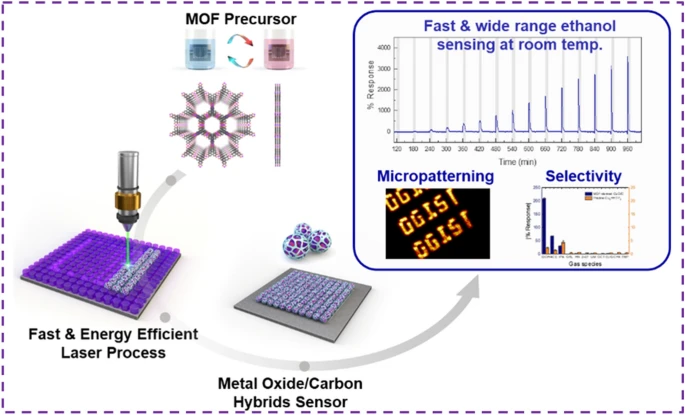
Lim, H., Kwon, H., Kang, H., Jang, J. E., & Kwon, H. J. (2024). Laser-induced and MOF-derived metal oxide/carbon composite for synergistically improved ethanol sensing at room temperature. Nano-Micro Letters, 16(1), 113.

Advancements in sensor technology have significantly enhanced atmospheric monitoring. Notably, metal oxide and carbon (MOx/C) hybrids have gained attention for their exceptional sensitivity and room-temperature sensing performance. ...
Go to DGIST Scholar